 EN
EN ES
ES
Shopping Cart
Your Cart is Empty
$0.00
View Cart

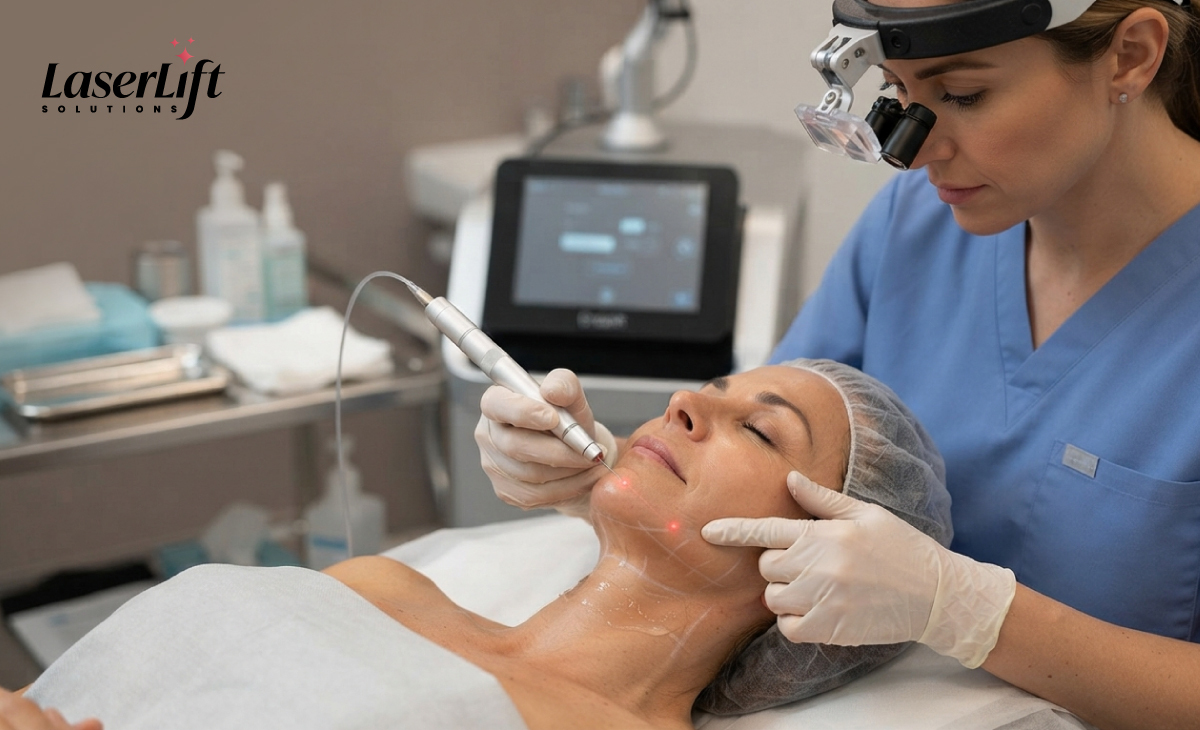
Every Endolift treatment is shaped by the patient’s anatomy, the area being treated, the degree of skin laxity, the amount of localized fat, and the specific outcome the provider is working to achieve.
That is why questions about discomfort, treatment time, the number of sessions, and visible results rarely have one fixed answer. A focused jawline treatment may require a different approach than a plan involving several facial areas or more pronounced tissue laxity.
The most useful way to understand the procedure is not through a universal timeline, but by looking at the clinical factors that influence each stage of treatment.
Endolift is not performed according to a single, standardized protocol. The treatment plan must reflect the patient’s facial structure, tissue quality, skin condition, fat distribution, and aesthetic goals.
A patient seeking subtle jawline definition may need a very different approach from someone treating the lower face, neck, or several areas during the same appointment. The amount of tissue involved and the complexity of the treatment also affect how the procedure is planned.
A professional consultation allows the provider to assess these variables before making recommendations. This evaluation helps establish realistic expectations and determines whether Endolift is appropriate for the patient’s concerns.
Patients can learn more about the evaluation process by scheduling an Endolift consultation
Does Endolift Hurt?
Patient comfort depends on the area being treated, individual sensitivity, tissue characteristics, and the extent of the procedure.
Some patients describe pressure, warmth, or mild discomfort during certain parts of the treatment. The sensation may also vary when the provider moves between areas with different tissue density or fat distribution.
There is no meaningful way to predict the experience based only on another patient’s treatment. A provider can offer a more accurate explanation after examining the area and determining the scope of the procedure.
How Long Does an Endolift Procedure Take?
The length of an Endolift session depends on what is being treated and how much work the treatment plan requires.
A focused procedure involving one area will not follow the same timeline as a treatment addressing multiple regions. The amount of localized fat, the degree of laxity, and the level of contouring required can also affect the duration.
Treatment Area
Smaller, more targeted areas may require less time than a plan involving the jawline, lower face, neck, or several areas together.
Tissue Characteristics
The amount and distribution of fat, skin thickness, and tissue laxity influence how the provider approaches the procedure.
Treatment Goals
A patient seeking mild contour refinement may require a different level of treatment than someone addressing more visible skin laxity or several concerns at once.
For this reason, procedure length should be discussed as part of the personalized treatment plan rather than presented as a fixed estimate.
More information about available Endolift treatments can be found here
How Many Endolift Sessions Will You Need?
Some patients may achieve their intended improvement with one Endolift treatment. Others may benefit from an additional session depending on their starting point, tissue response, and long-term goals.
The number of sessions may be influenced by:
The degree of skin laxity
The amount of localized fat
The number of areas being treated
The patient’s natural collagen response
The level of improvement the patient wants to achieve
The decision should be based on clinical evaluation rather than a preset number of appointments. A provider may also recommend monitoring how the tissue responds before deciding whether another treatment is appropriate.
When Will You See Endolift Results?
Endolift results do not appear in exactly the same way or at the same pace for every patient.
Some changes may be noticeable earlier, particularly when the treatment affects tissue contraction or localized contouring. Other improvements develop more gradually as collagen remodeling progresses after the procedure.
Skin quality, age, tissue condition, lifestyle, and the extent of treatment may all affect how quickly changes become visible.
Immediate Changes and Gradual Improvement
It is important to separate early visual changes from the longer biological process that follows treatment.
The procedure may create an initial tightening effect in some patients, but collagen remodeling takes time. Skin firmness and contour definition may continue to evolve as the tissue responds.
This gradual progression is one of the reasons providers should avoid promising a single results date for every patient.
Why Results Differ Between Patients
Even when two patients receive treatment in the same area, their results may develop differently.
A patient with mild laxity and strong skin quality may respond differently from someone with more advanced tissue changes or a larger amount of localized fat. The treatment plan, healing response, and collagen production all influence the final outcome.
This variation does not mean that the procedure is unpredictable. It means that results must be evaluated in the context of the patient’s anatomy and treatment goals.
Why a Consultation Matters More Than General Timelines
Questions such as “Does Endolift hurt?” or “How many sessions will I need?” are reasonable, but they cannot be answered accurately without considering the individual case.
A consultation gives the provider an opportunity to evaluate the treatment area, discuss expectations, explain the procedure, and determine what type of result may be realistic.
It also allows the patient to ask specific questions based on their anatomy rather than relying on generalized information or another person’s experience.
Additional answers about the procedure are available in the Endolift FAQs
Setting Realistic Expectations Before Endolift
A well-planned Endolift treatment begins with clear expectations.
The procedure may vary in length, comfort level, number of sessions, and results timeline because each treatment is designed around the patient rather than a fixed formula.
The area being treated, the amount of localized fat, the degree of laxity, and the patient’s biological response all matter. Understanding these variables provides a more accurate picture of the treatment than relying on universal numbers or simplified timelines.
Patients considering Endolift should begin with a professional consultation to determine whether the procedure aligns with their concerns, anatomy, and desired outcome.
Can Endolift be customized for different treatment areas?
Yes. The treatment can be adapted to different facial or body areas based on the patient’s anatomy, tissue condition, and goals.
Why does Endolift treatment time vary?
Treatment time depends on the number and size of the areas being treated, the amount of localized fat, the degree of skin laxity, and the complexity of the treatment plan.
Can one Endolift session address more than one concern?
Depending on the patient, Endolift may be used to address localized fat, skin laxity, and contour definition within the same treatment plan.
Is one Endolift session always enough?
No. Some patients may achieve their intended result with one session, while others may benefit from additional treatment based on their tissue response and goals.
Why do Endolift results take time to develop?
Some improvements are related to gradual collagen remodeling. This biological process continues after the procedure and may influence how the skin and contours change over time.
Request an appointment here: https://mynuceria.com or call Nuceria Health at (305) 398-4370 for an appointment in our Miami office.
Check out what others are saying about our services on Yelp: Wellness Center in Miami, FL.