 EN
EN ES
ES
Shopping Cart
Your Cart is Empty
$0.00
View Cart

Booking your first aesthetic consultation can feel more intimidating than it should. For most first-time patients, the hesitation is not really about the treatment itself. It is about uncertainty.
What will they ask me? Will I be judged? Will I be pressured into buying something? Am I supposed to know already what I want?
A good consultation should remove that uncertainty, not add to it. It should give you clarity about your skin, your options, your budget, and what kind of result is actually realistic for you.
If you have never had Botox, filler, laser treatments, or skin tightening, this guide will show you exactly what to expect, what to ask, and how to prepare so you can walk in informed, not anxious.
If you are considering treatment, you can book your free 1-on-1 consultation here: https://laserliftsolutions.com/consultation
You can also review treatment options here: https://laserliftsolutions.com/treatments
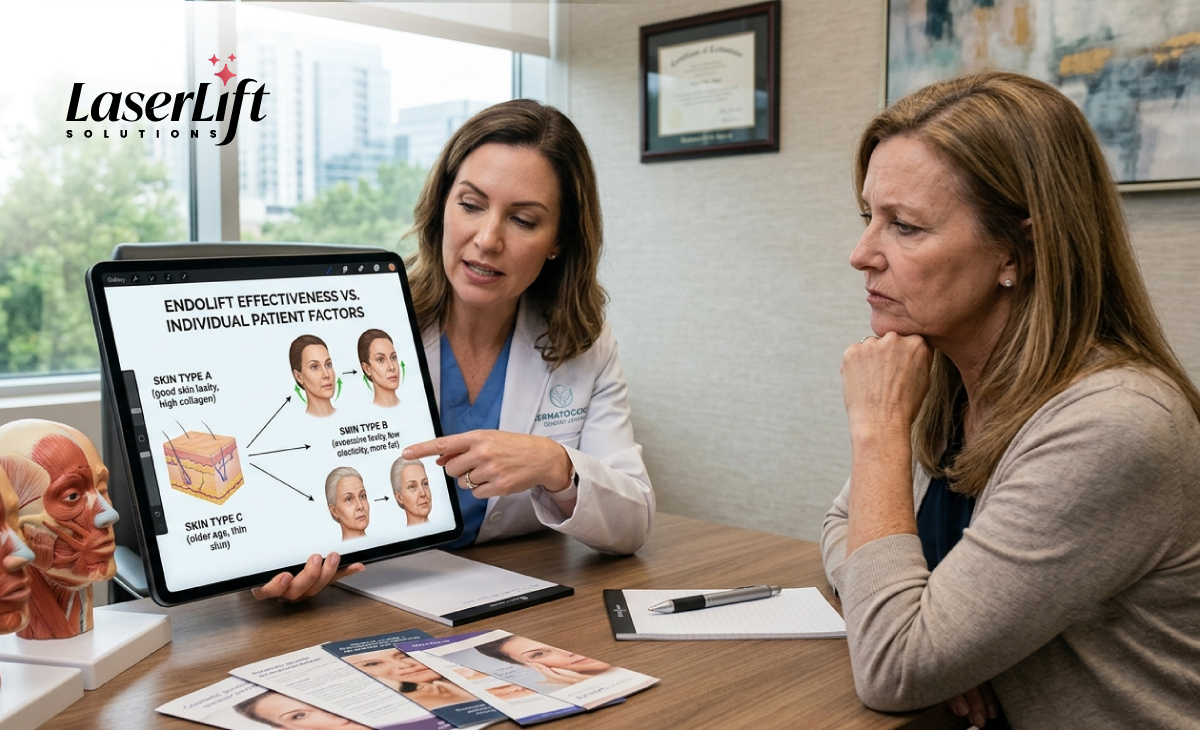
The consultation is where safe, effective treatment planning starts. It is not a formality before booking. It is the point at which a qualified provider evaluates your skin, reviews your medical history, discusses your goals, and decides whether a treatment is appropriate.
That matters because the right treatment is not always the one a patient first asks for. Patients who initially assume they need filler are better candidates for skin tightening, contouring, resurfacing, or a combination of these treatments, depending on their anatomy, skin quality, and degree of laxity. That is why professional evaluation matters. The American Academy of Dermatology explains the importance of qualified cosmetic assessment here: https://www.aad.org/public/cosmetic.
A strong consultation should do three things well. First, it should correctly identify the issue. Second, it should align with your goals, skin condition, and budget. Third, it should clearly set expectations, including what the treatment can and cannot do and what maintenance may look like.
That is why the consultation is often the difference between a result that feels considered and one that feels rushed.
Every clinic has its own process, but a proper first consultation usually includes a few standard steps.
You will usually be asked what bothers you most, what kind of result you want, and whether you are looking for subtle improvement or more visible change.
This is where many first-time patients make the same mistake: they describe a treatment instead of the concern. It is better to say, “I feel like my skin looks tired,” or “I do not like how heavy my lower face looks in photos,” than to say, “I think I need filler.”
A good provider should translate your concern into the right treatment plan.
Expect questions about medications, allergies, past cosmetic procedures, pregnancy status, skin conditions, cold sore history, and any tendency toward scarring or pigmentation issues.
This is not paperwork for the sake of paperwork. These details affect safety, candidacy, downtime, and the risk of complications. The AAD’s preparation guidance for cosmetic procedures is here: https://www.aad.org/public/cosmetic/hair-removal/laser-hair-removal-preparation
The provider may assess skin tone, texture, elasticity, hydration, pigmentation, redness, facial movement, volume loss, or skin laxity, depending on what you are considering.
This is where the consultation becomes specific to you. Two patients can have the same complaint on the surface and need very different treatment plans.
Once your provider understands your anatomy, skin condition, and goals, they should explain what they recommend, why they recommend it, how many sessions you may need, what downtime to expect, and what kind of timeline is realistic.
If the plan sounds vague, overly broad, or built around selling a package before explaining your condition, that is a bad sign.
If you are nervous, bring this list with you. You do not need to memorize anything.
1. Who will actually perform my treatment?
Do not assume the person doing the consultation is the person doing the procedure. Ask directly.
2. What are your credentials, and how often do you perform this treatment?
Training matters. Experience matters more than branding. The American Society of Plastic Surgeons has a useful patient safety reference here: https://www.plasticsurgery.org/patient-safety?sub=Choose+a+plastic+surgeon+you+can+trust.
3. Have you treated patients with my skin tone, skin type, or concern before?
This is especially important for lasers, pigmentation, acne scarring, and skin-tightening procedures where outcomes can vary based on skin characteristics.
4. What result is realistic for me?
You are not looking for a sales answer. You are looking for a clinically honest one.
5. How many sessions will I likely need?
Many first-time patients assume one treatment equals a full result. That is often not the case for lasers, resurfacing, tightening, or corrective work.
6. How long will it take to see results, and how long will they last?
This question quickly filters out weak consultations. If someone cannot explain the timeline and maintenance, they are not giving you a complete picture.
7. What are the risks, side effects, and signs of a complication?
You should understand the exact treatment being recommended, where it will be used, and what the known risks are before proceeding. The FDA guidance is here: https://www.fda.gov/consumers/consumer-updates/dermal-filler-dos-and-donts-wrinkles-lips-and-more.
8. Am I actually a good candidate for this treatment?
A trustworthy provider should be comfortable saying no, not yet, or this is not the best option for you.
9. What is the full cost, including follow-ups or maintenance?
Ask whether the quote includes review appointments, numbing, post-care, touch-ups, or additional sessions.
10. If I do not move forward today, what happens next?
A professional clinic will not make your decision harder by manufacturing urgency. You should be allowed to think, compare, and decide on your own timeline.
Aesthetic medicine is not just about results. It is also about judgment. The wrong clinic often becomes apparent before any treatment begins.
Be cautious if you hear things like “You need to book today,” “This will fix everything,” or “You will look ten years younger after one session.”
Ethical providers discuss probabilities, not guarantees. They explain variables, not miracles.
Before-and-after photos can be useful, but only if they are credible. Ask whether the photos are the provider’s own patients, whether the lighting is consistent, whether multiple sessions were involved, and whether the result shown is typical.
If injectables are being discussed, you should know what product is being used and why. If a laser or device is being recommended, you should know which device it is, what it is designed to treat, and why it fits your concern.
Any consultation that skips over medications, skin history, recent procedures, tanning, or healing tendencies is not thorough enough.
You do not need to overprepare, but a few things make your consultation much more productive.
Make a note of your current medications, allergies, prior cosmetic procedures, history of cold sores, recent tanning, pregnancy or breastfeeding status, and any history of scarring or hyperpigmentation.
Reference photos can help, but use them to show direction, not to demand someone else’s face. The goal is alignment, not imitation.
For many facial consultations, arriving with minimal makeup helps the provider assess your skin more accurately.
You do not need to apologize for having one. Budget affects treatment sequencing, maintenance strategy, and whether a provider recommends a staged plan or a more comprehensive approach.
If you are considering treatment soon after the consultation, mention any weddings, vacations, photo shoots, or work events. Timing matters.
Patients often focus too heavily on price. Price matters, but it should not be your first filter.
The better filter is whether the clinic combines medical credibility, honest planning, and patient education.
This distinction matters more than most first-time patients realize. Not every aesthetic setting follows the same standards for training, supervision, treatment planning, and safety.
That does not mean every med spa is automatically a bad option. It means you should evaluate who is treating you, their qualifications, how treatment decisions are made, and whether the clinic explains risk and candidacy clearly. You can review the clinic’s treatment menu here: https://laserliftsolutions.com/treatments
A good clinic explains. A weak clinic redirects. You should leave with a clearer understanding of your options than when you arrived.
If your consultation feels scripted, it probably is. Good consultations adapt to your anatomy, goals, comfort level, and budget.
This is usually a positive sign, not a negative one. In aesthetics, restraint is often evidence of judgment.
For many first-time patients, the hardest part is not the procedure. It is making the first call.
That is why the consultation matters so much. You are not supposed to show up knowing exactly which treatment you need. You are supposed to show up with questions, concerns, and a clear sense of what you want to improve.
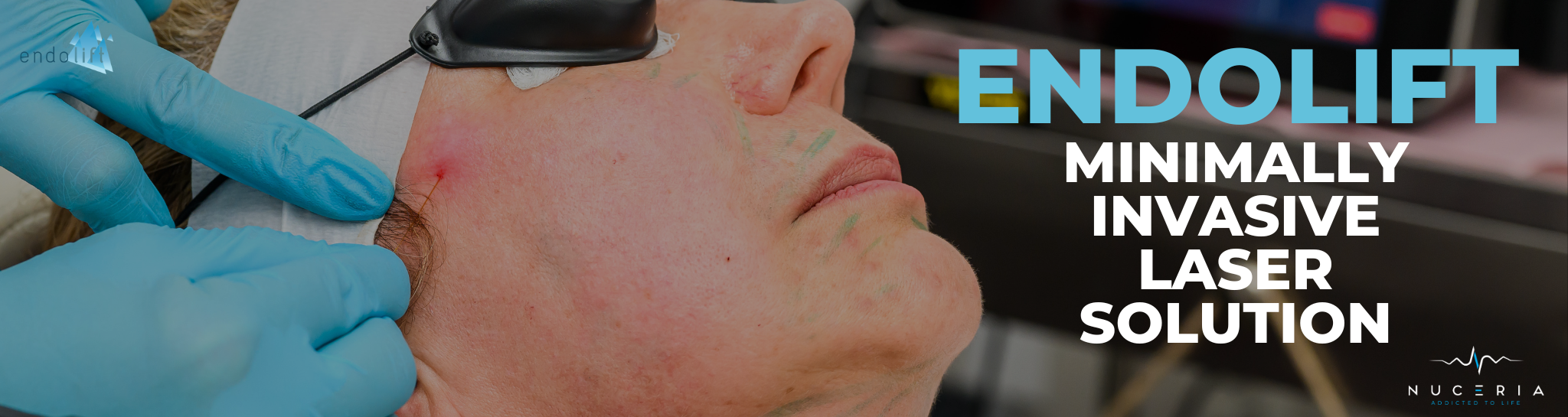
That human side of the consultation becomes even more important when the provider has real experience with the treatment being discussed. If a patient is researching Endolift specifically, this page gives useful context on candidacy, recovery, and treatment approach: https://mynuceria.com/miami-fl/endolift/en.
For a first-time patient, that matters. It means the consultation should not feel like a scripted sales step. It should be a conversation with someone who understands facial structure, candidacy, recovery, and what kinds of results are actually realistic.
First-time patients are not just looking for a treatment. They are looking for an experienced provider they can trust. For readers researching Endolift in Miami, Samantha Fonte adds human and clinical credibility. Learn more here: https://mynuceria.com/miami-fl/endolift/en
What happens after your consultation
After your consultation, you should leave with a clear next step, whether that is booking treatment, taking time to think, or deciding not to move forward yet.
If you do decide to move forward, you should know your expected timeline, the likely number of sessions (if relevant), recovery considerations, and the pricing structure before booking.
If you are still deciding, that is fine too. A strong consultation should reduce pressure, not create it.
Most first consultations take between 20 and 45 minutes, depending on the concern, the treatment area, and whether multiple options are being discussed.
No. In most cases, it is better to book based on your concern rather than self-diagnose and treat it. A good provider should help determine what is appropriate.
No. You should ask. A qualified provider should answer clearly and without defensiveness.
Sometimes, yes. But same-day treatment is not always the best choice, especially if you are still comparing options, have an upcoming event, or need time to review aftercare and pricing.
That is completely normal. A consultation should still be valuable because it gives you useful information, even if you choose not to book.
Not necessarily. In aesthetics, low pricing can reflect limited customization, less experienced providers, or volume-driven treatment decisions. Value matters more than sticker price.
CTA: Book your free 1-on-1 consultation — no pressure, no commitment: Book a Consultation | Laser Lift Solutions
Request an appointment here: https://mynuceria.com or call Nuceria Health at (305) 398-4370 for an appointment in our Miami office.
Check out what others are saying about our services on Yelp: Wellness Center in Miami, FL.