 EN
EN ES
ES
Shopping Cart
Your Cart is Empty
$0.00
View Cart

Body composition assessment estimates how much of your weight comes from fat and fat-free tissue. It can add context to the number on your scale.
The method matters. A home scale, a bioimpedance device, and a whole-body DXA scan do not provide the same information. Their results also have limits.
This guide explains the main methods and the terms you may see on a report. It also shows how to use those results without treating one number as a diagnosis.
Body composition describes the materials that make up your body. A simple model divides body weight into fat mass and fat-free mass.
Fat mass is the total amount of fat in your body.
Fat-free mass includes muscle, water, organs, bone, and other tissue.
Body fat percentage is fat mass expressed as a share of total body weight.
Reports may use the terms lean mass, lean soft tissue, and fat-free mass differently. For example, DXA reports separate lean soft tissue from bone mineral content.
Lean tissue includes more than muscle. A change in a lean-mass reading does not prove that you gained or lost the same amount of muscle. Check what the report actually measures or estimates.
A scale shows total weight. It does not separate fat from muscle, water, or bone.
Body mass index, or BMI, uses weight and height. It is a useful screening tool, but it does not directly measure body fat or show where fat is stored.
The CDC recommends considering BMI alongside medical history, blood pressure, physical examination, and relevant lab findings.
These tools answer different questions. Weight tracks total mass. BMI puts weight in relation to height. Body composition adds estimates of the tissues that contribute to that weight.
Read more: CDC guidance on BMI.
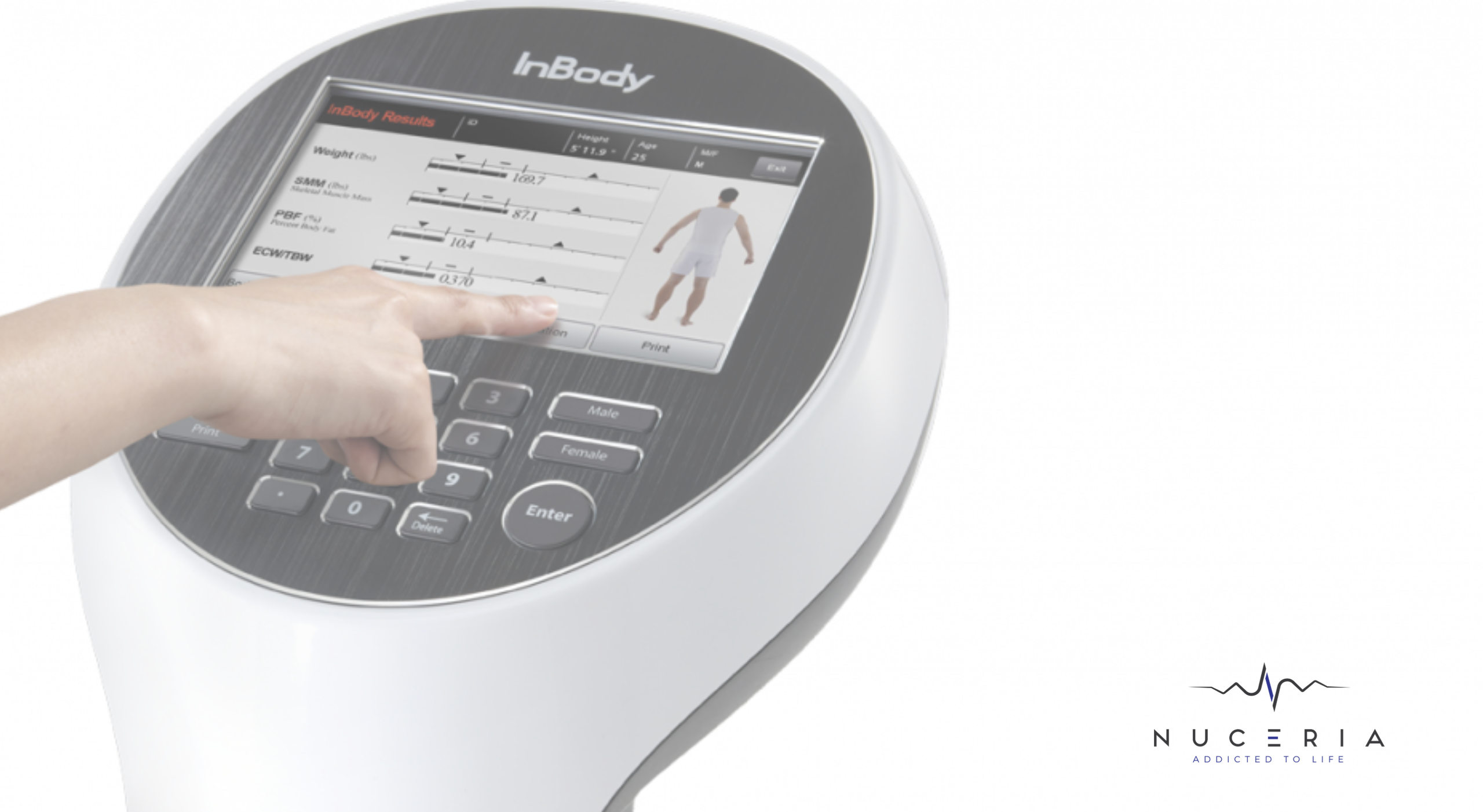
BIA sends a small electrical current through the body and measures resistance to that current. The device uses equations to estimate body water and other components, such as fat-free mass.
The equation, device, and person being tested affect the result. BIA estimates should not be treated as direct measurements of fat or muscle.
Dual-energy X-ray absorptiometry is also called DXA or DEXA. A whole-body scan can estimate fat, lean tissue, and bone mineral content.
This differs from the usual hip-and-spine DXA exam used to assess bone density. Ask which exam is being proposed and what question it is meant to answer.
A DXA report can provide detailed information, but it still needs interpretation. It does not replace a review of your health, symptoms, or physical function.
Read more: UCSF explanation of whole-body DXA.
A waist measurement adds information about fat distribution around the abdomen. It does not calculate total body fat or muscle mass.
A clinician can help interpret it alongside your other measurements. It is another piece of the assessment rather than a complete health verdict.
Accuracy varies by method and testing conditions. A device that gives similar results on repeat tests can still differ from a reference method. Repeatability and accuracy are different things.
One study of healthy adults found that a multi-frequency BIA system gave consistent repeat readings but differed from DXA in its estimates of fat and fat-free mass.
A separate systematic review found that the BIA devices studied were not equivalent to a four-compartment reference model for individual results. That review covered healthy, weight-stable adults who were not athletes or pregnant.
These findings do not establish a single error margin for every device or person. They support using results with context and caution.
Research: BIA repeatability and agreement with DXA; BIA compared with a four-compartment reference model.
For BIA, hydration, recent meals, exercise, and time of day can affect readings. Follow the testing provider’s instructions and record the conditions of each test.
Use the same method and device when possible.
Keep the testing conditions as consistent as practical.
Check units and report definitions before comparing numbers.
Ask whether a small change could reflect normal measurement variation.
Do not compare a home scale’s body fat estimate with a DXA result as though they were interchangeable. Avoid changing your eating, drinking, or medication routine just to obtain a preferred reading.
Which values were measured, and which were estimated?
Does the device’s equation fit my age and health situation?
How much variation is expected with this method?
Would a repeat test change my nutrition or treatment plan?
Which other measures should we track?
You do not need to chase a universal body fat target. Ask what a result means for your health, goals, and daily function.
Bring your report to a qualified health professional if you need help interpreting it. Discuss your food habits, activity, medical history, and the purpose of testing.
Tracking your activity can also be useful. CDC guidance for adults includes both aerobic exercise and muscle-strengthening activity. Choose activities that match your abilities and health needs.
A practical plan should explain what you are working toward and how you will assess progress. That may involve several measures rather than repeated scans alone.
Read more: CDC adult physical activity guidance.
Questions about nutrition support in Miami? Contact Nuceria Health to discuss your goals and ask which current services may fit your needs.
No. BMI uses weight and height. Body composition methods estimate components such as fat and fat-free mass. Both need to be interpreted in context.
No. Lean tissue includes muscle and other tissues. Report definitions vary, and DXA separates lean soft tissue from bone mineral content.
They can be reviewed together, but their values are not interchangeable. Differences may reflect the methods rather than a real change in your body.
A report alone does not provide a complete diagnosis. A clinician considers other findings, including your history, symptoms, examination, and any relevant tests.
There is no single schedule for everyone. Ask whether another test would inform a decision and whether the expected change is large enough to measure reliably.
Request an appointment here: https://mynuceria.com or call Nuceria Health at (305) 398-4370 for an appointment in our Miami office.
Check out what others are saying about our services on Yelp: Wellness Center in Miami, FL.