 EN
EN ES
ES
Shopping Cart
Your Cart is Empty
$0.00
View Cart

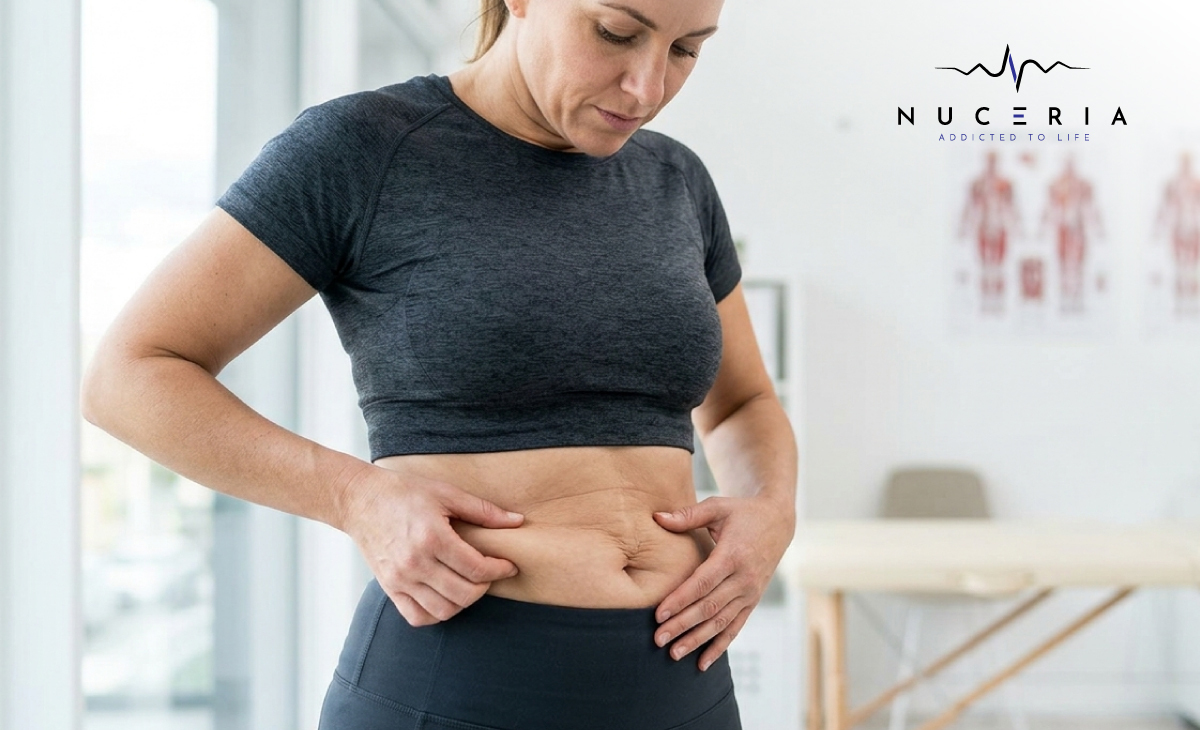
You lost the weight. Now there's skin that didn't get the memo.
That's not a willpower problem — it's biology. Collagen and elastin, the proteins that keep skin tight, don't rebuild as fast as fat disappears. There's no single fix. There are a few, and they each do a different job: Endolift tightens from underneath, microneedling rebuilds the surface, and for skin that's beyond what either can do, surgery removes it outright.
Here's how to tell which one you actually need.
Skin stretches because collagen and elastin let it. Gain weight, and both stretch to cover the extra volume.
Lose weight — especially fast — and there's more skin than your body needs. Elastin doesn't snap back the way it did at 22. That's the short version. The long version depends on a few specific factors.
How much you lost. More weight lost means more skin was stretched, and more is left with nowhere to go.
How fast you lost it. Skin adjusts better to slow change. This is part of why weight loss on a GLP-1 medication — as we cover in our GLP-1 breakdown — can outpace the skin's ability to keep up.
Your age. Collagen production slows with age, so the same weight loss shows up differently at 25 versus 55.
How long you carried the weight. Skin stretched for a decade behaves differently than skin stretched for a year.
Sun damage and smoking. Both break down collagen independently of weight, and the effects stack.
Genetics. Two people can lose the same amount of weight and get very different skin results. That's mostly just biology, not something either of them did wrong.
No single treatment fixes loose skin on its own. Each one works at a different depth, which is why the most effective plans combine them instead of picking one.
Endolift (mynuceria.com/miami-fl/endolift/en) uses a thin laser fiber inserted under the skin through a tiny entry point. No incision.
The laser heats tissue from below. That does two things: an immediate tightening effect from the heat itself, and new collagen production over the following months as your body responds.
It's used on the jawline, neck, and chin, but also on body areas — abdomen, arms, thighs — where weight loss leaves laxity behind. Downtime is usually just a few days.
Microneedling (mynuceria.com/miami-fl/microneedling/en) works differently. Fine needles create tiny, controlled injuries in the skin's surface layer.
Your body's healing response kicks in, producing new collagen and elastin over the following weeks. It's especially useful for stretch marks and texture changes — the surface-level stuff that Endolift, working underneath the skin, doesn't directly address.
Most plans involve a series of sessions spaced weeks apart. Downtime is minimal — think mild sunburn for a day or two.
Why combine them: Endolift works deep, microneedling works at the surface. Loose skin after weight loss is rarely just one or the other, so treating both depths in one plan usually beats picking a single treatment and hoping it covers everything.
HydraFacial (mynuceria.com/miami-fl/hydrafacial-in-miami/en) cleanses, exfoliates, and infuses the skin with hydrating serums. It makes skin look and feel better fast.
What it doesn't do is rebuild collagen or tighten anything. Its job is keeping skin healthy between the treatments that actually do the structural work — not replacing them.
Endolift and microneedling stimulate your skin to tighten itself. They don't remove tissue.
For mild to moderate laxity, that's enough. For significant excess skin — the kind that shows up after massive weight loss or bariatric surgery — there's simply more skin than either treatment can resolve. That's a surgical problem, not a collagen-stimulation problem.
Common procedures: a tummy tuck for the midsection, an arm lift, a thigh lift, or a panniculectomy for significant abdominal overhang. Most surgeons want your weight stable for 6 to 12 months first — which is exactly why finishing a structured weight loss program before surgery, rather than doing both at once, tends to go better.
Endolift and microneedling both take a series of sessions, not one visit.
Visible improvement builds over weeks, not days.
Full results from a treatment series typically take a few months.
The outcome is meaningfully tighter, better-quality skin — not the same transformation as surgical skin removal.
If you're comparing non-surgical treatments to surgery, weigh downtime and cost against how much correction you actually need. They're not solving the same problem.
Collagen loss isn't only about weight. Estrogen decline — the kind that happens in perimenopause — accelerates it too, which is part of why skin laxity often shows up around the same time as menopause, independent of any weight change. We go deeper on this in our piece on the hormones behind weight, skin, and energy.
For some women, hormone replacement therapy for women addresses that piece directly — not instead of skin treatments, but alongside them.
The right combination — or whether surgery makes more sense — comes down to your degree of laxity, the area involved, your age, and how the weight came off.
A few things worth knowing before you start:
If you lost weight quickly, adequate protein and resistance training during the process reduces how much laxity develops in the first place — worth knowing before you're a year past the weight loss and already dealing with the result.
Nutrient status matters for collagen rebuilding. Starting with a full testing panel tells you if you're actually deficient in something (vitamin C, zinc, protein) rather than guessing.
For some patients, medically supervised peptide therapy is part of the picture, since certain peptides are studied specifically for skin and collagen support.
What causes loose skin after weight loss?
Skin stretches to accommodate weight gain, and collagen and elastin often can't rebuild fast enough to fully retract it — especially after large or rapid weight loss.
Can Endolift tighten loose skin without surgery?
For mild to moderate laxity, yes. It won't remove excess skin the way surgery does, but it can meaningfully tighten and improve skin quality.
What does microneedling do for loose or aging skin?
It triggers new collagen and elastin production through controlled micro-injury, particularly useful for texture and stretch marks rather than deep laxity.
Is HydraFacial helpful for loose skin?
It helps skin quality and hydration, not tightening. Think of it as maintenance between more targeted treatments.
How many treatments does it take to see results?
Both Endolift and microneedling typically need a series of sessions, with results building over weeks to a few months.
Can loose skin be prevented during weight loss?
Not entirely, but losing weight at a moderate pace with adequate protein and resistance training reduces how much develops.
When is surgery the better option?
When there's significant excess, hanging skin rather than looser, less elastic skin — usually after major or long-term weight loss.
Where can I get Endolift, microneedling, or HydraFacial in Miami?
Look for a provider who assesses your specific degree of laxity before recommending a plan, instead of defaulting to one treatment for everyone.
This content is for educational purposes and is not a substitute for personalized medical advice. Consult a qualified provider to determine which treatment approach is appropriate for you.
Not sure which option fits your skin? Book a Consult for a personalized assessment.
Request an appointment here: https://mynuceria.com or call Nuceria Health at (305) 398-4370 for an appointment in our Miami office.
Check out what others are saying about our services on Yelp: Wellness Center in Miami, FL.