 EN
EN ES
ES
Shopping Cart
Your Cart is Empty
$0.00
View Cart

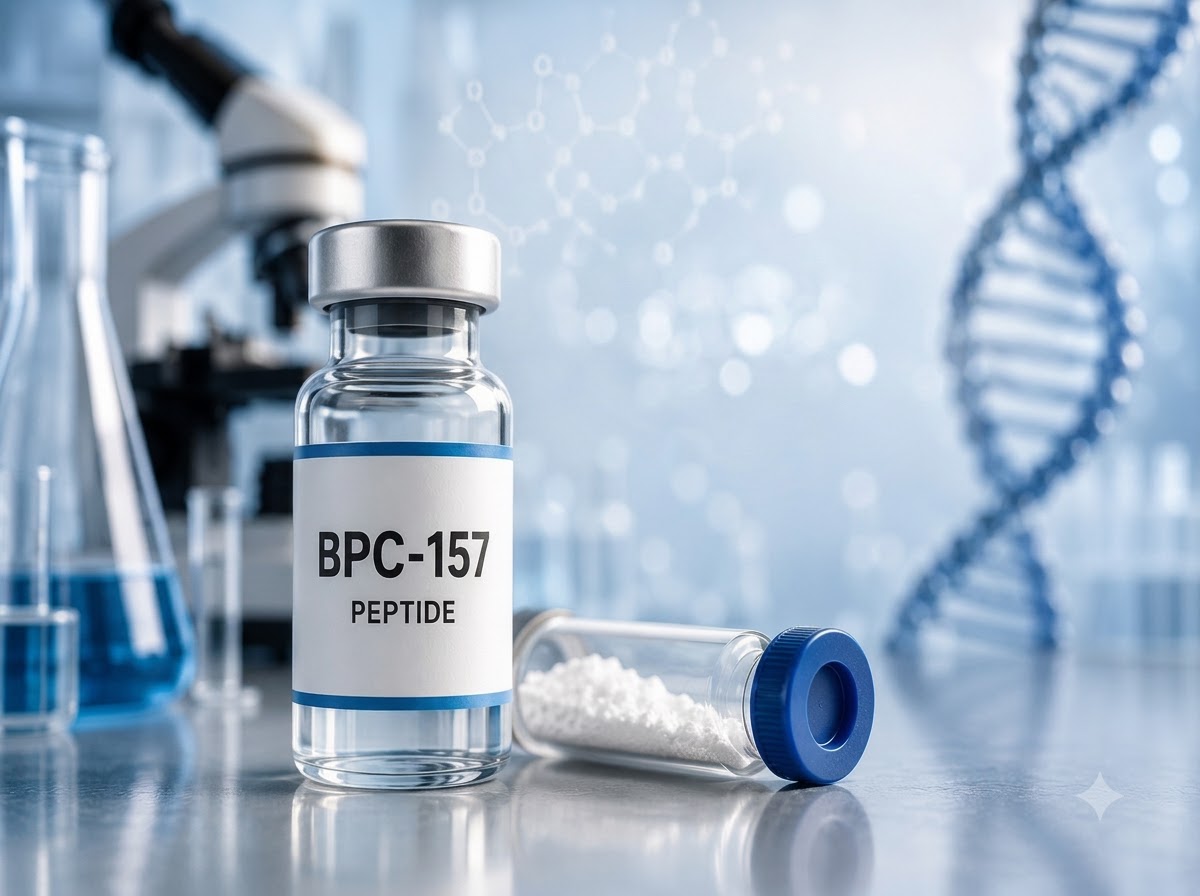
BPC-157 is not an FDA-approved drug. Whether a specific BPC-157 product may be prescribed or compounded is a separate question governed by the substance’s form, route, pharmacy pathway, clinician authority, and federal and state rules.
The FDA’s July 2026 review brought renewed attention to BPC-157, but the headline “FDA ban” is too broad. Patients need to separate FDA approval, pharmacy compounding, clinical prescribing, online research products, and state-specific requirements.
There is no single federal yes-or-no answer that covers every context. As of the FDA materials reviewed for this update, BPC-157 free base and BPC-157 acetate were evaluated for possible inclusion on the Section 503A Bulks List. The July 2026 briefing materials proposed not including either form.
That finding does not make BPC-157 FDA-approved. It also should not be rewritten as a blanket criminal ban on every form of possession, research, discussion, or state-law activity. The precise question is whether a particular substance, formulation, route, prescriber, pharmacy pathway, and use fit the rules that apply.
Section 503A addresses specific conditions for compounding human drug products, including patient-specific prescriptions. The FDA’s review of a bulk substance for that list is a compounding question; it is not an approval of the substance’s safety, effectiveness, or use for every condition discussed online.
The Pharmacy Compounding Advisory Committee’s work is advisory. The FDA remains responsible for the agency’s final determination. Until the record changes, the article should describe the 2026 action with care: BPC-157 is not FDA-approved, and the briefing materials proposed not including the free base or acetate forms on the 503A Bulks List.
The table below keeps the comparison narrow. It shows why one peptide’s regulatory record should not be used to answer a different peptide question.
|
Peptide |
FDA and compounding record |
What this does not establish |
Patient takeaway |
|
BPC-157 |
FDA evaluated BPC-157 free base and acetate in the 2026 503A review and proposed not including either form. BPC-157 is not FDA-approved. |
This is not a blanket criminal ban, and it is not FDA approval. |
Verify the current federal and state rules, route, formulation, prescriber, and pharmacy pathway. |
|
GHK-Cu |
Non-injectable GHK-Cu is in Category 1 under evaluation; injectable routes are excluded. |
Category 1 is not FDA approval and does not authorize injectable use. |
Do not transfer non-injectable status to an injectable product. |
|
Other research peptides |
KPV, TB-500, and MOTS-c were among substances reviewed in the July 2026 PCAC process for possible 503A listing. |
One peptide's review does not determine another's status. |
Evaluate each substance separately; do not rely on a research-use label. |
Clinical supervision does not create a separate FDA exemption for BPC-157. The analysis still depends on the prescriber’s authority, whether a patient-specific prescription is required, the pharmacy pathway, the formulation and route, and the rules that apply in the patient’s state. A clinician’s evaluation can help assess medical history, contraindications, alternatives, and monitoring, but it does not turn an unapproved compound into an FDA-approved medication.
Patients can bring these questions to a qualified clinician during a wellness program consultation. If weight management is the goal, review it as a separate clinical issue through a medically supervised weight-management program rather than assuming that peptide regulation answers the treatment question.
A supervised clinical setting gives a patient an opportunity to discuss medical history, current medications, contraindications, treatment goals, alternatives, and follow-up. It does not erase the need to verify the substance, formulation, route, prescriber, pharmacy, and applicable rules.
Buying a vial online is a different situation. A research-chemical product may have uncertain identity, concentration, sterility, storage history, or manufacturing quality. A certificate of analysis may describe a laboratory test, but it does not prove that a product is safe, sterile, effective, or approved for human administration.
“Research peptide” is a market phrase, not a legal category. If a website’s claims indicate that a product is intended for human treatment, a disclaimer may not resolve the regulatory concern. Patients should not inject products labeled only for laboratory research or follow an injection protocol copied from social media.
Before discussing BPC-157 with a clinician, verify:
The exact substance, salt or form, formulation, and route of administration.
Whether it is FDA-approved for the proposed use.
Whether the product is compounded and, if so, which pharmacy pathway applies.
The prescriber’s credentials and role in the clinical decision.
The product’s source, storage requirements, sterility information, and quality documentation.
The expected monitoring plan, adverse-event instructions, and available alternatives.
This article addresses BPC-157, GHK-Cu, and other non-GLP-1 research peptides. Compounded semaglutide and tirzepatide involve a separate regulatory history. Patients should not transfer conclusions from an FDA update on compounded GLP-1 medications to BPC-157 or GHK-Cu.
BPC-157 is not an FDA-approved drug. The FDA’s 2026 review of BPC-157 free base and acetate for the Section 503A Bulks List should be described precisely: the July briefing materials proposed not including either form, and the advisory process is not the same as a final agency determination or a blanket criminal ban.
A clinic setting does not authorize every peptide, and a research-use label does not make a product suitable for human treatment. The safest regulatory question is specific: which form, which route, which prescriber, which pharmacy pathway, which state rules, and what clinical monitoring?
There is no single federal yes-or-no answer for every context. BPC-157 is not FDA-approved, and the FDA reviewed its free base and acetate forms for possible inclusion on the Section 503A Bulks List. The July 2026 materials proposed not including either form. That should not be rewritten as a blanket criminal ban or as permission for human use.
“FDA ban” is too broad for the action described in the 2026 materials. The review concerns a pharmacy-compounding pathway under Section 503A. It does not establish that every form of possession, research, discussion, or state-law issue has the same answer.
A medical spa may operate only within the authority of its licensed clinicians, applicable pharmacy rules, and federal and state requirements. Its business label does not create a blanket exemption. The substance, route, prescription, pharmacy, clinical rationale, and monitoring plan must be evaluated.
No. Research-use language does not establish FDA approval, human safety, sterility, or a lawful clinical pathway. Marketing claims and intended use matter, and patients should not self-administer products sold only for laboratory research.
No. The FDA’s current 503A list places non-injectable GHK-Cu in Category 1 under evaluation and excludes injectable routes. Category 1 does not mean FDA approval and does not authorize injectable use.
No. Compounded semaglutide and tirzepatide involve a different regulatory history. Their status does not determine the status of BPC-157, GHK-Cu, or other research peptides.
This article was prepared using the following FDA materials:
FDA Pharmacy Compounding Advisory Committee meeting materials
FDA briefing document for BPC-157-related bulk drug substances
FDA list of bulk drug substances nominated under Section 503A
This article is for educational purposes only. It is not legal advice or medical advice and does not determine whether a particular patient, clinician, pharmacy, formulation, route, or state-specific practice is permitted. A qualified healthcare professional and appropriate legal or regulatory counsel should review individual cases.
Related clinical reading: BPC-157 evidence and safety; medical information about peptide therapy in Miami.
Review this article quarterly and whenever the FDA publishes a new determination, warning letter, recall, or compounding-policy update.
Request an appointment here: https://mynuceria.com or call Nuceria Health at (305) 398-4370 for an appointment in our Miami office.
Check out what others are saying about our services on Yelp: Wellness Center in Miami, FL.