 EN
EN ES
ES
Shopping Cart
Your Cart is Empty
$0.00
View Cart

The Endolift laser is a minimally invasive treatment that delivers 1470 nm diode-laser energy beneath the skin through a very fine optical fiber. The heat reaches water-rich tissue in the dermis and superficial fat layer, where it can encourage collagen remodeling, create some tissue contraction, and reduce selected areas of localized fullness. It is not a facelift, liposuction, weight-loss treatment, or solution for lost facial volume.
The Endolift laser makes more sense once you stop thinking of it as a surface laser. Its purpose is to place energy close to the dermis, supporting fibrous tissue, and superficial fat that influence contour.
So, how does Endolift work? A provider guides the fiber through a planned treatment plane and delivers controlled heat. That route can address mild laxity and a limited amount of superficial fat when both contribute to a softer jawline or fullness under the chin.
The result depends on the tissue treated, the energy delivered, fiber depth and direction, and whether the patient’s anatomy is a good match.
Endolift is an interstitial laser treatment. In plain English, the energy is delivered inside the tissue rather than across the surface of the skin.
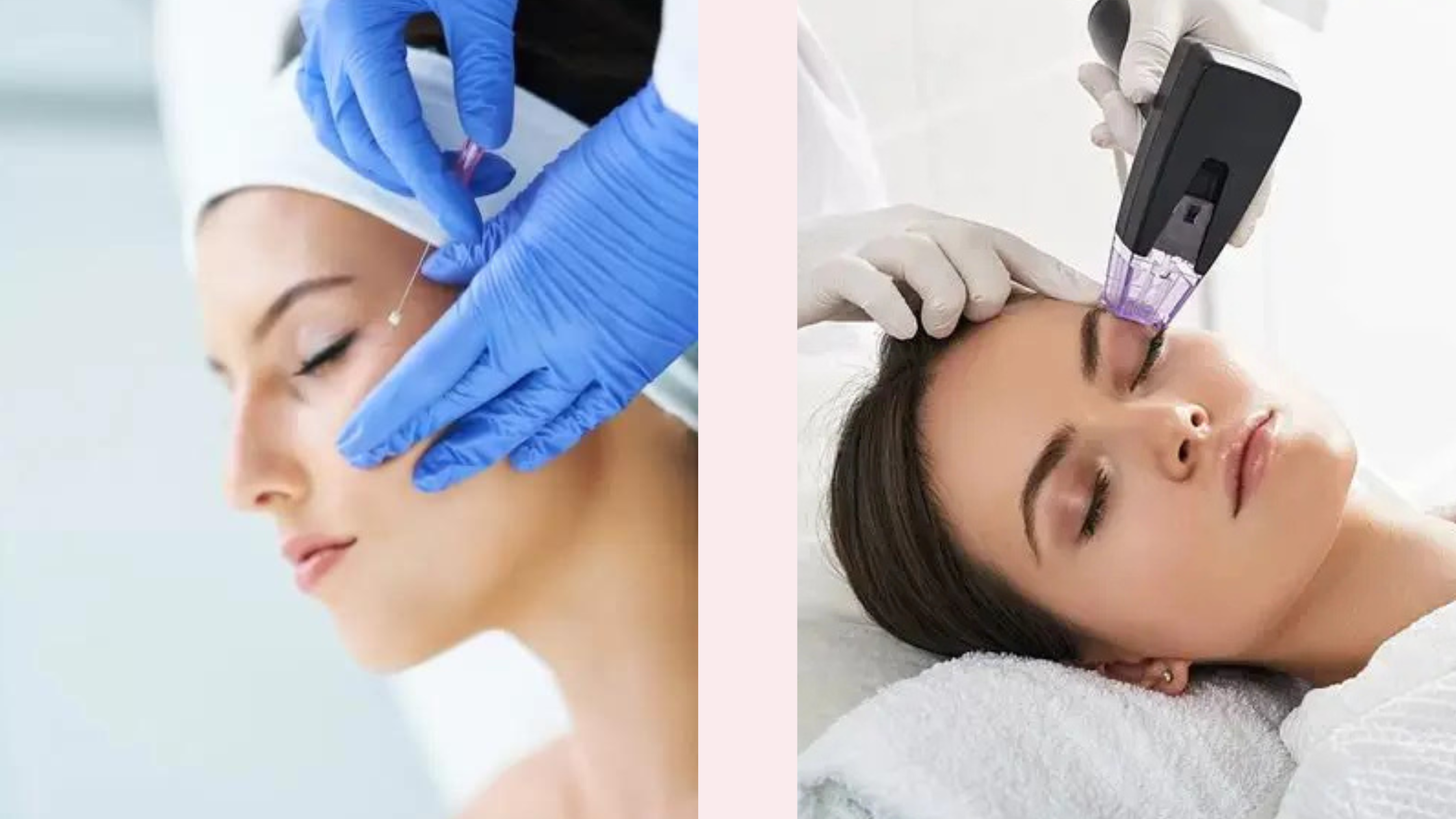
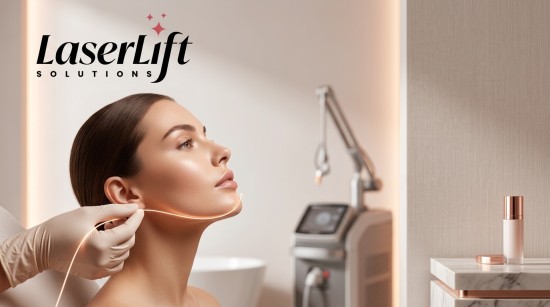
The provider creates a very small entry point and places the Endolift fiber beneath the skin. The fiber is then moved through the selected area—often the lower face, jawline, under-chin region, or neck—while energy is delivered in a controlled pattern.
This differs from a surface laser, which works through the epidermis, and from liposuction, which removes fat through suction. Endolift is designed for tissue remodeling and contour refinement, not large-volume removal.
The fiber connects to a diode-laser system. 1470 nm describes the wavelength; Endolift X refers to the current-generation branded platform used with compatible microfibers.
The wavelength matters because tissue does not absorb every type of laser energy in the same way. At 1470 nm, the laser is strongly absorbed by water. Skin, connective tissue, blood, and fat-containing tissue all contain water, so the energy creates a localized photothermal effect around the fiber.
It is too simple to say that the laser “targets fat” as if it ignores everything else. The superficial hypodermis contains adipose cells, water, connective tissue, and fibrous septa. Controlled heat can affect selected fat cells and the collagen-rich tissue that supports the skin.
The FDA 510(k) record for the LASEmaR 1500 system identifies a 1470 nm diode laser and includes laser-assisted lipolysis among the device’s stated indications. That clearance applies to the device and its cleared uses; it is not a guarantee of a specific cosmetic result or every claim made about the Endolift brand.
Energy settings are only one part of the treatment. Depth, movement speed, tissue thickness, and anatomy influence how heat spreads. A human histology pilot also found different collagen and elastin responses at tested energy levels, reinforcing the need for individualized planning.
The fiber is placed beneath the skin because the relevant structures are beneath the surface.
The dermis contains the collagen and elastin framework that contributes to firmness. The superficial hypodermis contains fat and fibrous tissue that can contribute to fullness or a softer contour. Delivering energy into those layers brings the treatment closer to the source of the concern while leaving the epidermis outside the primary target.
That distinction explains why Endolift is not a resurfacing procedure. There is no intentional epidermal ablation, although it does not remove the risk of heat-related injury. A fiber that is too shallow, excessive energy, or poor technique can still affect the skin surface.
This is especially important in the lower face and neck, where the skin can be thin and the anatomy includes variable fat compartments, nerves, blood vessels, and the platysma muscle. If you are comparing options for the lower face or neck, the consultation should focus on which tissue layer is creating the visible concern.
|
Layer / component |
What the 1470 nm fiber does |
|
Epidermis |
Stays at the surface; it is not the primary treatment target. |
|
Dermis |
Controlled heat can contract collagen-rich tissue and support later remodeling. |
|
Superficial hypodermis |
Heat can affect selected localized fat and fibrous support tissue. |
|
Fiber path |
Delivers energy beneath the skin along the planned treatment area. |
The tightening effect develops in two stages.
The first is a local thermal response. When collagen-rich tissue is heated within a controlled range, existing fibers can contract. This may create an early sense of firmness or a subtle contour change, but it is not surgical skin removal or the final result.
The second stage is remodeling. The body repairs the heated tissue and reorganizes the surrounding matrix. Fibroblasts may produce and arrange new collagen during that process. That is what “collagen stimulation” means here: a controlled tissue response that evolves as the area heals.
Evidence is promising but not definitive. A systematic review of the 1470 nm Endo-lift laser reported favorable findings for selected face and neck applications while noting that larger controlled trials are still needed. Endolift may help the right patient, but a fixed amount of tightening should never be promised.
Mild laxity and superficial fat often affect one another. A small pocket under the chin can make the skin look heavier, while loose skin can make the area look fuller than it is.
Because the fiber can travel through the dermal-subdermal and superficial hypodermal planes, the provider can address both issues during the same treatment plan. Heat may affect selected adipose cells and the fibrous tissue around them, while the body processes the treated material over time.
This is localized fat reduction, not large-volume fat removal. Endolift is not a replacement for liposuction or a weight-loss treatment.
“In one pass” needs context. It means the same treatment route can address overlapping concerns—not one pulse, one sweep, or an identical number of movements for every patient.
Patients often see “Endolift” and “Endolift X” used as if they describe two unrelated procedures. Usually, Endolift refers to the treatment concept: delivering laser energy beneath the skin through a micro-optical fiber. Endolift X is the current-generation branded platform name associated with the LASEmaR 1500 system and dedicated fibers.
The underlying principle remains the same: controlled 1470 nm energy is delivered beneath the skin. The platform, fiber design, settings, anesthesia approach, and labeling may differ. The official Endolift X information explains the system’s fiber and platform terminology.
Some materials also refer to EndoliftXs, a version that can be paired with aspiration. That is not the same as a fiber-only treatment, so ask whether aspiration is part of the plan.
Endolift can be useful for selected patients, but it has clear limits. It cannot remove a large amount of fat like conventional liposuction, treat overall weight concerns, remove significant excess skin, or reposition descended tissue like a facelift or surgical neck lift.
It also cannot restore facial volume lost with age. If the main issue is hollowing in the cheeks, temples, or lower face, reducing additional fat may make the face look less supported. The plan may need to consider volume restoration, skin quality, or surgery instead.
Endolift is generally more appropriate for mild to moderate laxity, a limited area of localized fullness, or both. The right candidate is someone whose anatomy can realistically respond to the type of change the treatment can create.
A useful consultation should identify the source of the concern before a device is selected. Ask:
Is the visible issue coming mainly from skin laxity, superficial fat, deeper fat, muscle, or lost volume?
Is the goal skin tightening, localized fat reduction, or both?
Where will the fiber be placed, and how will the provider control depth and heat?
What result is realistic for my anatomy, and what would require surgery or another treatment?
Which device and fiber are being used, and how does the plan relate to the device’s cleared indication?
The answers should sound specific to your face or neck. If the explanation could apply to every patient, the plan may not be individualized enough. For related patient questions, see the treatment FAQ.
Endolift places a fine optical fiber beneath the skin and delivers controlled 1470 nm energy into the dermal-subdermal and superficial fatty layers. The resulting heat can contract collagen-rich tissue, support remodeling, and affect selected localized fat.
The 1470 nm wavelength is strongly absorbed by water. Since skin, connective tissue, and fat-containing tissue contain water, the energy creates a controlled thermal effect around the fiber. The fat effect is water-mediated, not a beam that isolates only fat cells.
Endolift X is the current-generation branded platform name associated with the LASEmaR 1500 system and compatible fibers. The core principle remains subdermal delivery of 1470 nm energy, although the device, fiber, settings, and anesthesia approach can vary.
It can reduce a selected amount of localized superficial fat when fullness and mild laxity overlap. It is not designed for large-volume fat removal or weight loss.
No. Endolift does not remove excess skin or reposition descended facial tissues. It may help selected patients with mild to moderate laxity, but it does not reproduce the structural change of a facelift or neck lift.
The epidermis is not the primary target, but heat-related injury or pigment changes remain possible. A provider should review skin type, pigment history, medications, healing history, and treatment depth before proceeding.
Some patients notice an early change from tissue contraction, but the result continues to develop as swelling settles and collagen remodeling takes place. Timing varies by area, energy delivery, and healing response.
If you are considering an Endolift treatment in Miami, an in-person evaluation at My Nuceria Health can help separate laxity, localized fat, and volume loss before a treatment is chosen. The goal should be a plan that fits your anatomy and keeps the result natural.
Request an appointment here: https://mynuceria.com or call Nuceria Health at (305) 398-4370 for an appointment in our Miami office.
Check out what others are saying about our services on Yelp: Wellness Center in Miami, FL.